
Phu Quoc is a year-round destination — but the experience changes dramatically depending on when you arrive. Get the timing right and you'll have pristine skies, calm seas, and golden sunsets. Get it wrong and you might spend a week watching rain hammer the windows. This guide breaks it down month by month.
Phu Quoc's Two Seasons at a Glance
Phu Quoc has two distinct seasons: a dry season (November to April) and a wet season (May to October). Unlike the rest of Vietnam — where seasons shift dramatically from north to south — Phu Quoc follows a Gulf of Thailand weather pattern, which means it has one of the most reliable dry seasons in Southeast Asia.
| Period | Weather | Crowds | Prices |
|---|---|---|---|
| Nov – Jan | Sunny, 28–32°C, calm seas | High (peak) | High |
| Feb – Apr | Hot, dry, excellent visibility | Medium–high | Medium–high |
| May – Jun | Warm with occasional showers | Low | Low |
| Jul – Aug | Wet season, strong winds | Very low | Very low |
| Sep – Oct | Heaviest rain, possible storms | Very low | Lowest |
Month-by-Month Breakdown
November – January: Peak Dry Season
This is Phu Quoc at its absolute best. The northeast monsoon has swept away the clouds, leaving skies a deep, unbroken blue. Sea temperatures hover around 28–29°C and visibility for snorkelling reaches 15–20 metres. Sunsets over An Thoi (right from Sunset Town, two minutes from our hotel) are legendary during these months.
The downside: December and January are the busiest months on the island. International flights fill up early, hotel prices peak, and Sunset Town's night market gets crowded. Book accommodation at least 4–6 weeks in advance if you're travelling in December or over the Vietnamese Lunar New Year (Tết), which falls between late January and mid-February.
February – April: Shoulder Dry Season
February through April gives you almost everything the peak season offers, with 20–30% fewer tourists and noticeably better value on accommodation. Temperatures climb — April can hit 35°C in the afternoon — but mornings are ideal for beach time. Water sports operators are in full swing: kitesurfing near Bai Dai, snorkelling trips to the southern archipelago, and fishing excursions all run daily.
April is when we locally consider the sea to be at its warmest and clearest before the rains arrive. It's also when Phu Quoc's famous pepper plantations are harvested, so if you enjoy agri-tourism, this is a great bonus.
May – June: Early Wet Season
The southwest monsoon arrives in May, bringing warm, occasional afternoon showers rather than full-day downpours. Mornings are typically dry and warm. The island empties of tourists significantly, prices drop by 30–50%, and you'll often have stretches of beach almost entirely to yourself.
June can be volatile — some years are barely wetter than April; other years bring heavy storms. Check the 10-day forecast before booking non-refundable trips.
July – August: Mid Wet Season
July and August bring the most sustained rain. Strong westerly winds make the sea choppy — ferries to the Bai Sao and southern island clusters are sometimes cancelled. That said, rain rarely lasts all day; mornings often clear, and afternoon downpours are warm and dramatic rather than cold and miserable.
Prices are at their lowest. Long-stay guests and slow travellers who don't mind the weather will find Phu Quoc wonderfully peaceful — and the island's waterfalls (Suoi Tranh, Suoi Da Ban) are at their most spectacular.
September – October: Heaviest Rain
These are statistically the wettest months. Tropical depressions can bring several days of grey skies in a row. Beach activities are limited, and some smaller restaurants and tour operators close for the off-season. However, rates are rock-bottom and Phu Quoc's food scene, night market, and Sunset Town remain active year-round.
If you're flexible and price-sensitive — and plan to spend time at spas, cooking classes, or working remotely — October is surprisingly liveable.
Special Considerations
Fireworks at Sunset Town
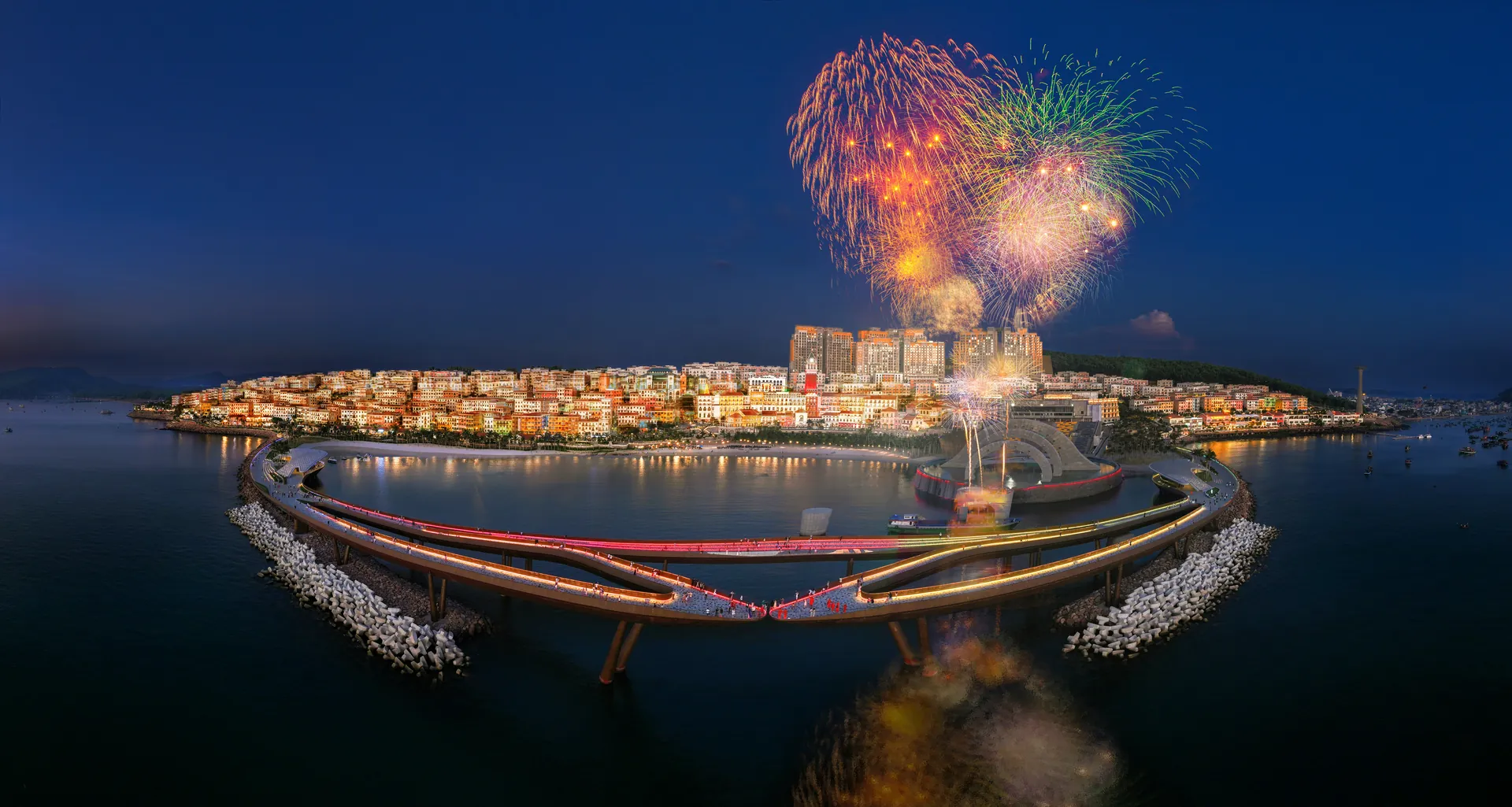
One of Phu Quoc's best-kept secrets: Sunset Town puts on fireworks almost every evening. They're visible from the high-floor rooms and balconies at Sóng and Sun Hotel year-round — rain or shine. Our Executive Suite on the 5th floor has a direct sightline.
Tết (Lunar New Year)
Tết is the single busiest travel period in Vietnam, falling between late January and mid-February depending on the lunar calendar. Flights and accommodation sell out months in advance. If you plan to visit during Tết, book 2–3 months ahead.
Long-Stay Guests
For guests staying 7 nights or longer, the shoulder months (February–April, May–June) offer the best combination of manageable weather, good value, and a quieter island. We offer 10% off for 7+ nights, 20% off for 14+ nights, and 30% off for 30+ nights — making the shoulder season especially attractive for remote workers and expats.
Ready to plan your stay?
Sóng and Sun Hotel is 2 minutes from Sunset Town in An Thoi. Pet-friendly, 24/7 check-in, long stays welcome.
Message us on WhatsApp